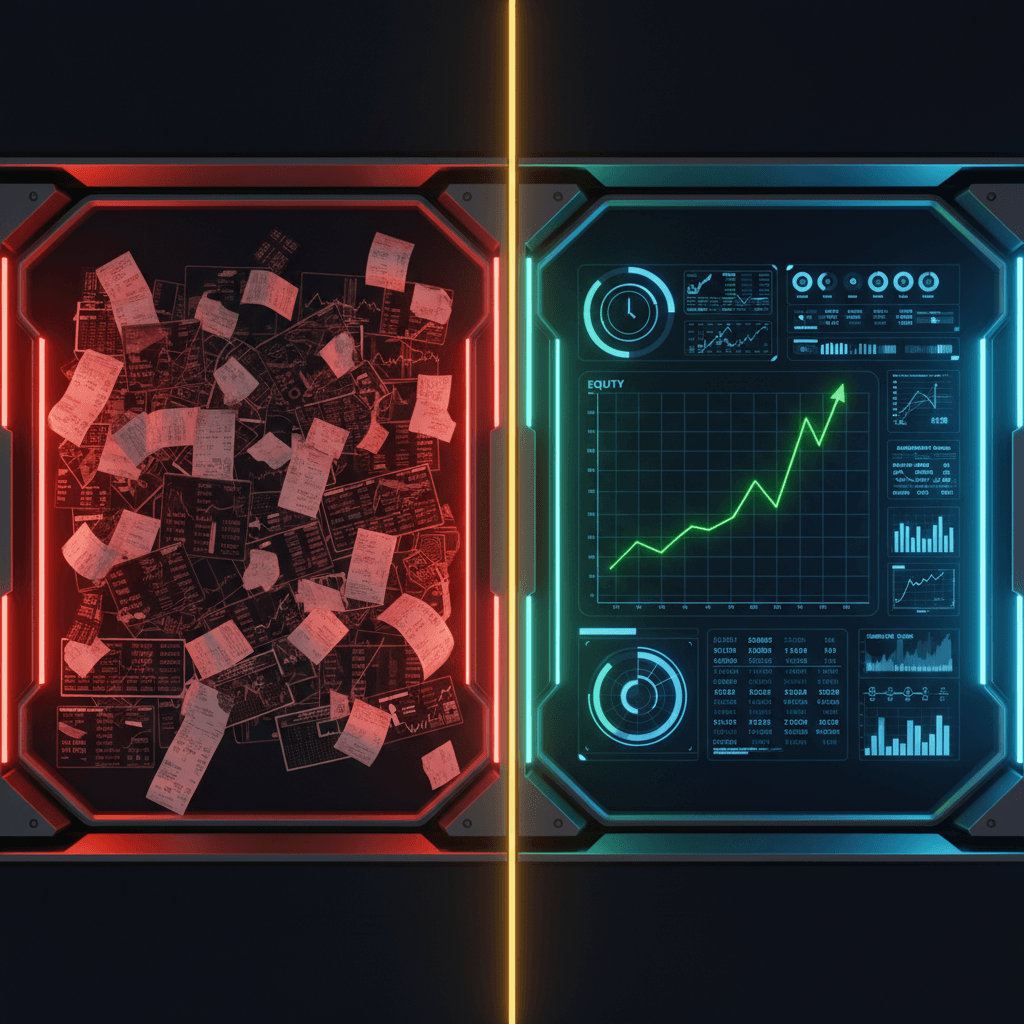
Picture this. You have been trading for six months. Some days you are up, some days you are down, and at the end of the month you check your account balance and squint at a number that tells you almost nothing about what actually happened. Was it that NQ short on Wednesday that saved the week? Was it the three revenge trades on Friday that nearly wiped it out? You have no idea. And that is the problem.
Trading analytics is the answer to every "I think" and "I feel" statement a trader has ever made about their own performance. It replaces vibes with numbers. Guesswork with graphs. Hope with hard data. And if that sounds boring, consider this: the traders who track their analytics are the ones who survive long enough to actually get good at this.
In This Article
What Trading Analytics Actually Means
Trading analytics is the systematic collection, measurement and analysis of trading data to understand performance, identify patterns and make better decisions. Strip away the fancy language and it boils down to this: looking at what your trades actually did, not what you hoped they would do.
At its simplest, trading analytics answers three questions. Am I making money? Where am I making it? And where am I losing it? At its most sophisticated, it can tell you the optimal time of day to trade, which market conditions suit your strategy best, how much capital to allocate to each approach, and when to sit on your hands and do nothing.
The Data Layer
Every trade generates data. Entry price, exit price, time in trade, direction, size, commissions, slippage, the market you traded, the setup you used. Most traders let this data evaporate. They close the trade and move on. Trading analytics captures it all and turns it into something useful.
In ACE Portfolio Tracker, this happens automatically when you connect NinjaTrader or upload trades via CSV. Every data point feeds the analytics engine that calculates your key performance metrics.

The Analysis Layer
Raw data on its own is noise. The analysis layer is where patterns emerge. This is where you discover that your win rate drops by 15% after two consecutive losers (revenge trading alert). Or that your Monday trades are consistently better than your Friday trades. Or that Strategy B has a higher profit factor than Strategy A despite a lower win rate.
These are the insights that change behaviour. And changing behaviour is the entire point.
Why It Matters More Than You Think
Ask any profitable trader what separates them from the 90% who lose money and they will not talk about a secret indicator or a magic setup. They will talk about process. Discipline. Review. Measurement. In other words, analytics.
The Feedback Loop
Trading analytics creates a feedback loop. Trade. Measure. Analyse. Adjust. Trade again. Without the measurement step, you are just doing the same thing over and over and expecting different results. The classic definition of insanity, except with real money.
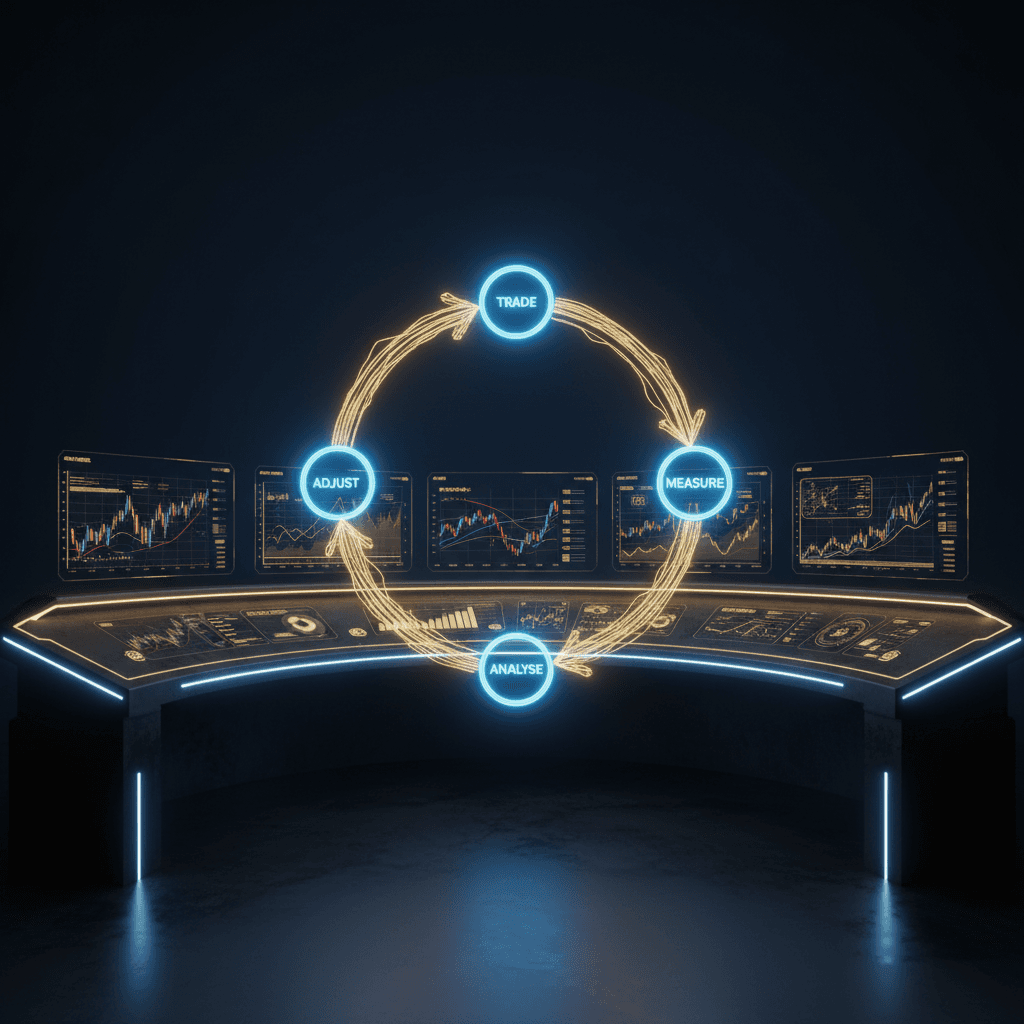
When you can see your drawdown in real time, you respond differently. When you can see your win rate dropping below its historical average, you ask better questions. When you can see that one strategy is carrying four others, you make smarter allocation decisions.
The Confidence Factor
Here is something nobody talks about enough. Trading analytics builds confidence. Not the fake confidence of a winning streak, but the structural confidence that comes from knowing your numbers. When you know your strategy has a 1.8 profit factor over 500 trades, a five trade losing streak does not break you. You expected it. Your Monte Carlo simulation showed it would happen roughly twice a year. You sit tight, follow the process, and let the edge play out.
Compare that to the trader who has no idea if their strategy has an edge. Five losses in a row and they are Googling new indicators, switching timeframes, doubling position sizes or reading about revenge trading after they have already done it.
See What Your Strategies Are Really Doing
Connect NinjaTrader, upload CSV, or enter trades manually. ACE calculates every metric automatically. No spreadsheets. No guessing.
Get Started FreeWhat You Should Be Tracking
Not everything matters equally. Some traders create elaborate spreadsheets with 40 columns and never look at them. That is the opposite of useful. Here are the core analytics categories that actually move the needle.
| Category | What to Measure | Why |
|---|---|---|
| Profitability | Net P&L, profit factor, expectancy | Answers the fundamental question: am I making money? |
| Risk | Max drawdown, drawdown duration, risk reward ratio | Tells you how much pain comes with the profit |
| Consistency | Win rate stability, equity curve smoothness, Sharpe ratio | Separates luck from edge |
| Behaviour | Overtrading frequency, revenge trade detection, time of day patterns | Reveals the human errors that bleed accounts |
| Comparison | Strategy vs strategy, account vs account, period vs period | Identifies what deserves more capital and what deserves less |
ACE Portfolio Tracker calculates all of this automatically. No formulas. No manual entry. Your dashboard updates as trades flow in and you can slice the data by strategy, account, time period, market or setup type. Check the Trading Analytics Guide for the full walkthrough.
What Happens When You Do Not Track
Let us get specific about what trading without analytics looks like in practice.
- You keep running losing strategies. Without metrics, you cannot tell the difference between a strategy in a normal drawdown and a strategy that has lost its edge entirely.
- You overtrade. Without seeing the data on trade frequency and its correlation with your P&L, you do not realise that your best months are the ones where you took fewer trades. Read more about overtrading patterns.
- You size incorrectly. Without knowing your risk reward ratio and win rate combination, your position sizing is arbitrary.
- You repeat mistakes. Without a mistake tracking system, the same errors show up month after month.
- You cannot prove performance. If you want to sell strategies through Wave Park or attract followers, unverified claims mean nothing. Tracked analytics mean everything.
The full breakdown is in Why Traders Lose Without Tracking Performance. It is not comfortable reading, but it is necessary.
Manual vs Automated Analytics
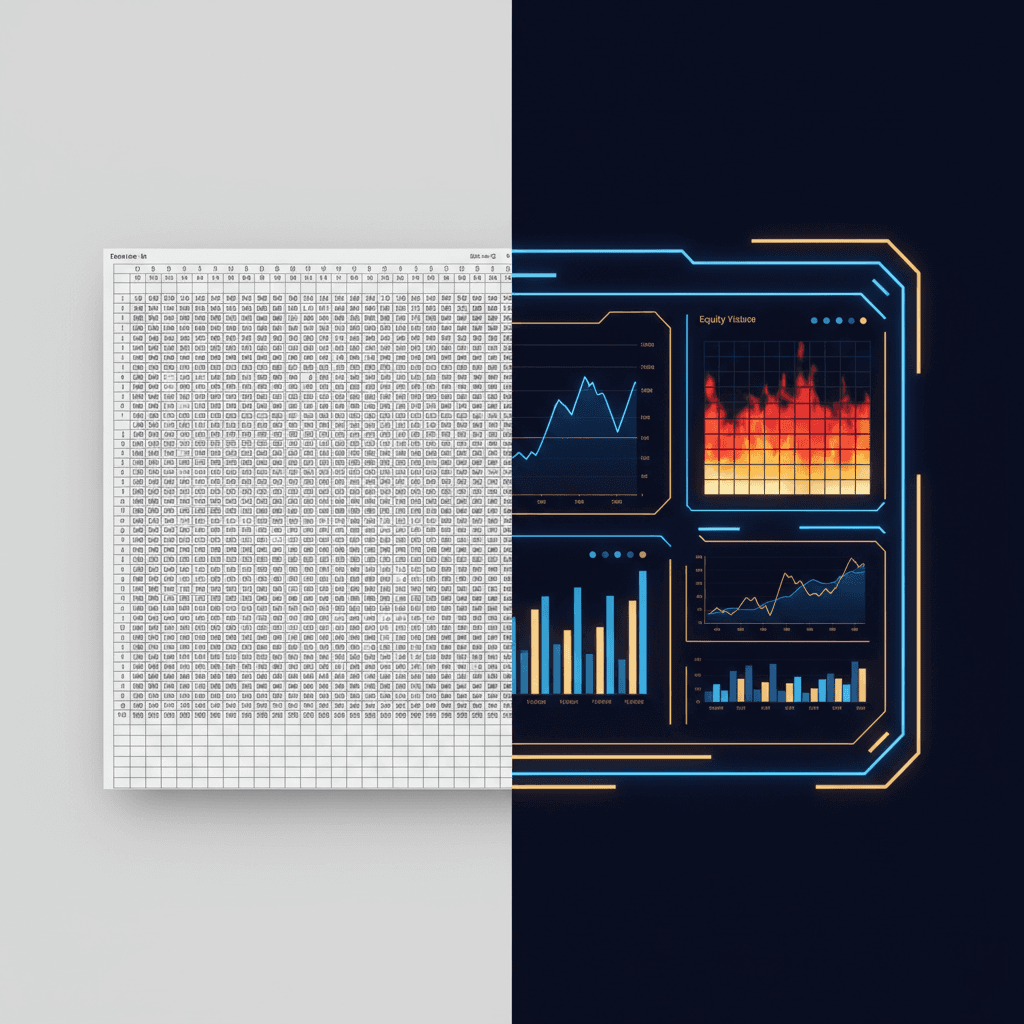
Some traders swear by their spreadsheets. And look, there is value in manually entering trades because it forces you to review each one. But the reality is that manual tracking breaks down at scale. Once you are running three strategies across two accounts, manual entry becomes a second job.
| Feature | Manual (Spreadsheets) | Automated (ACE Portfolio Tracker) |
|---|---|---|
| Setup time | Hours to build formulas | Minutes to connect |
| Accuracy | Prone to entry errors | Synced from source data |
| Scale | Breaks at 3+ strategies | Unlimited strategies |
| Real time updates | Only when you update | Live as trades execute |
| Advanced metrics | Need custom formulas | Calculated automatically |
| Multi market | Separate sheets needed | Unified dashboard |
| Equity curves | Manual charting | Auto generated |
| Monte Carlo | Not practical | Built in |
The sweet spot for most traders is automated capture with manual review. Let ACE Portfolio Tracker handle the data collection and calculation. You focus on the analysis and decision making. That is the approach covered in the Manual vs Automated Trade Journaling guide.
Ditch the Spreadsheets. Ride the Dashboard.
Auto sync your NinjaTrader trades, import from any broker, and let ACE do the maths.
Try It Free for 7 DaysBeyond Traditional Trading
Trading analytics is not just for futures and forex traders. The same principles apply anywhere you are making decisions with money at risk.
Sports Betting Analytics
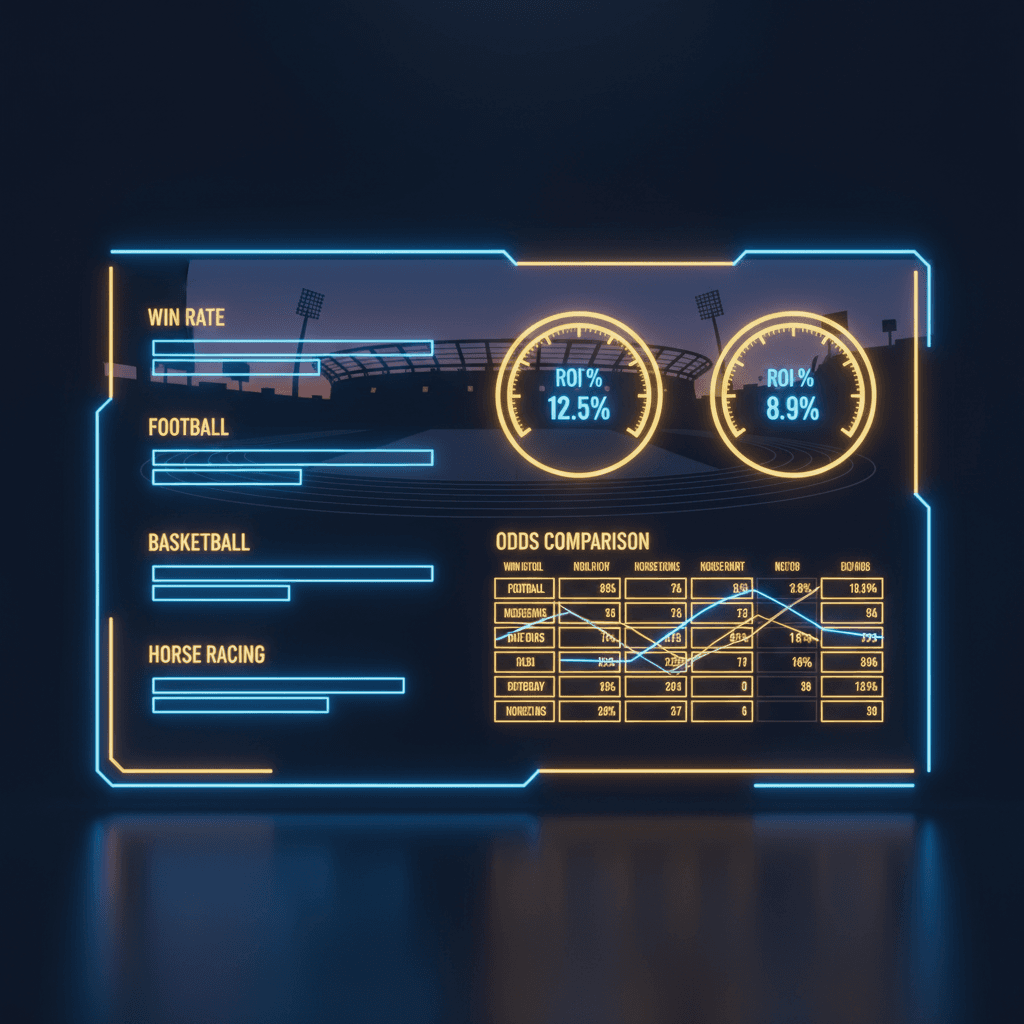
If you are placing bets on AFL, NRL, NBA or any sport, you need the same analytics discipline. Win rate by sport, ROI by bookmaker, performance by bet type, streak tracking and bankroll management. ACE Portfolio Tracker includes a full sports betting tracking module that treats your bets with the same analytical rigour as your trades.
Crypto Analytics
Crypto markets run 24/7 and move fast. Without crypto specific tracking, you are flying blind across exchanges. ACE normalises your crypto performance alongside your other markets for a true portfolio view.
Bot and Algorithm Performance
Running automated strategies is only half the equation. The other half is monitoring them. A bot that performed well in backtesting can degrade in live markets. Trading analytics catches the divergence between backtest and live performance before your account does.
The ACE Difference
ACE Portfolio Tracker is not another generic journal app. It is a performance analytics platform built by traders who got tired of switching between five dashboards, three spreadsheets and a notes app.
The design philosophy is simple. Track everything. Calculate everything. Display it in a way that makes you want to look at it. Because the best analytics in the world are useless if you never open the dashboard.
Getting Started with Trading Analytics
If you are new to tracking, do not try to boil the ocean. Start simple.
- Pick your primary market. Focus on the one you trade most. Futures on NinjaTrader? Connect it directly. Crypto or forex? Upload your first CSV.
- Track for 30 days. Get a baseline. Do not change anything yet. Just let the data accumulate.
- Review your core metrics. Win rate, profit factor, max drawdown. These three numbers tell you the state of play.
- Identify one thing to improve. Maybe your drawdowns are too deep. Maybe your win rate drops on Fridays. Maybe one strategy is dragging the portfolio down. Pick one thing and focus on it.
- Repeat. Trading analytics is not a one time setup. It is an ongoing feedback loop that compounds like interest.
Head to the Trading Dashboard Setup guide for the full step by step walkthrough of getting your ACE Portfolio Tracker dashboard dialled in.
Your Trading Scoreboard Starts Here
Every trade is a data point. Every data point is an edge. Start tracking with ACE Portfolio Tracker and turn chaos into clarity.
Get Started FreeRelated Articles
Continue building your analytics knowledge with these guides from the trading analytics silo.
- Trading Analytics Guide - The complete starter guide to trading analytics
- Best Trading Metrics Every Trader Should Track - The essential metrics breakdown
- Trading Dashboard Setup for All Markets - Build your ACE dashboard step by step
- Multi Market Trading Analytics Explained - Track everything in one place
- How to Use a Trading Journal Properly - Pair analytics with journaling
- How to Analyse Trading Strategies - Take your analysis deeper